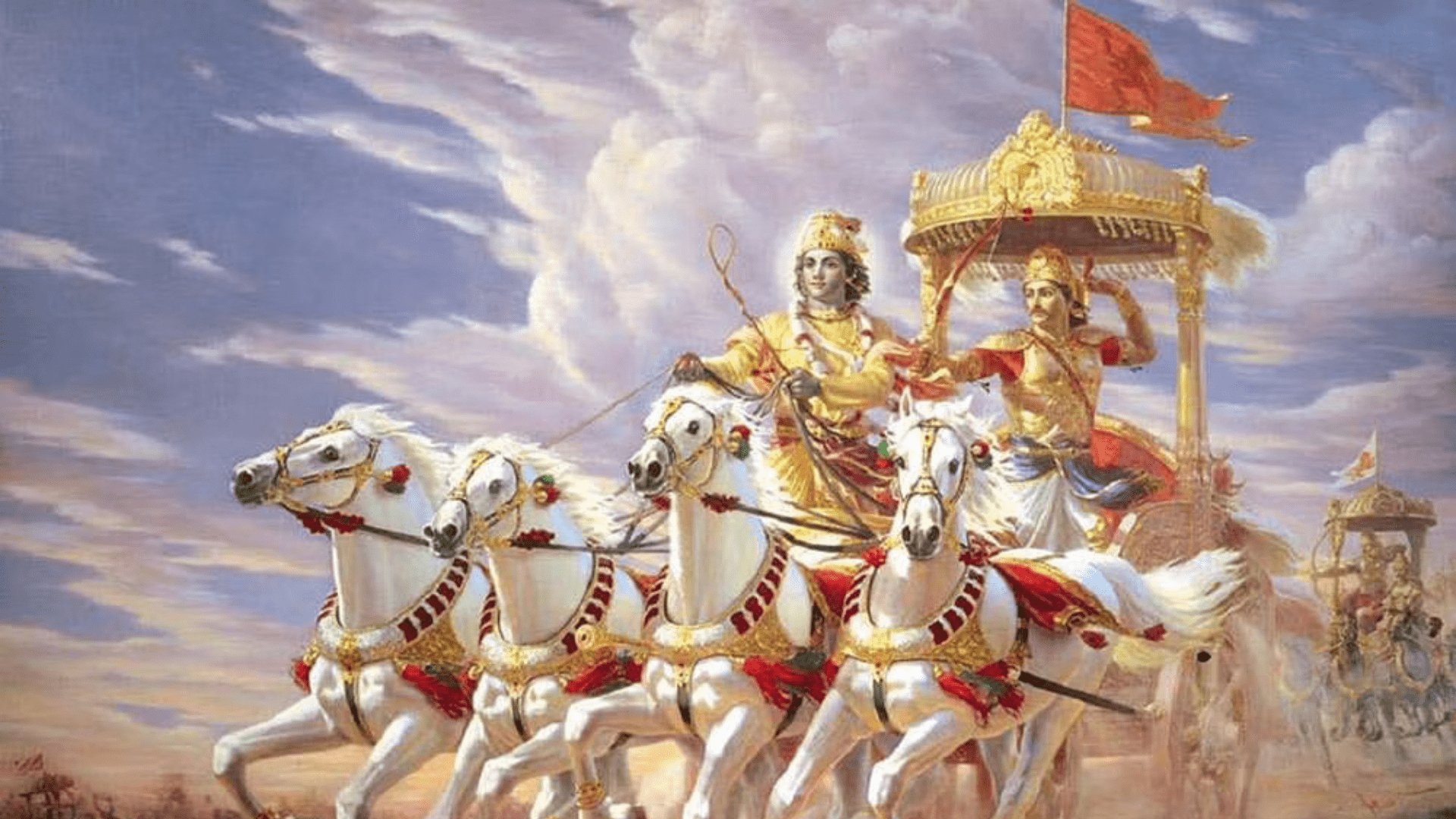
Entry submitted in The Bhagavad Gita Activity organized by ABC-A Book Closet and Explore Kids World. Thanks to the organizers for facilitating such enriching and powerful exercise to dive deep within and the opportunity to express myself.
- Activity: Krishna Says
a. Moral Dilemma:
You’re faced with a difficult decision: How would you weigh the options and make a choice that aligns with your values?
Through introspecting and asking what my heart wishes to do and consulting my mind (understanding what my logical brain says. Finally considering if the decision is in alignment with my inner voice. In harmony with all three of them, I would make or not make the choice, or fine tune it accordingly before moving ahead, in trust and surrender.
b. Personal Growth:
You’re struggling with self-doubt: How would you cultivate self-confidence and self-awareness?
In my experience, a good way that works to overcome self-doubt is taking action, once the direction is clear. Even if the challenge seems daunting and fear clouds judgement, taking focussed baby steps gradually, brings one to a point where their own result of those steps becomes the evidence, that forms the ground for their self-assurance. A sense of knowing comes from personal experience, and then there is no looking back.
c. Relationships:
You’re struggling with attachment or detachment: How would you cultivate healthy relationships and boundaries?
Unhealthy attachment (trying to control others or feeling defeated if unable to, or people pleasing etc.) is rooted in our own fears of abandonment and lack of understanding.
Cultivating healthy relationships comes from understanding others’ emotions and feelings. This means to develop real empathy for them. Adding to this, holding space for them while supporting them in their journey goes a long way in establishing harmony in relationships.
Simultaneously, boundaries are a must have in all relationships, although they can be like a firm and polite no, rather than being harsh. Boundaries harness a sense of safety in relationships which is essential for everyone to open up and embrace vulnerability as a strength.
d, Spiritual Growth:
- You’re seeking guidance on your spiritual path: How would you reflect on your values and goals?
Following the spiritual path is the most important aspect of a human journey. In fact, these two are inseparable, as the human is nothing but consciousness or spirit condensed in a dense form, in order to experience itself.
The goal is to detach from the matrix (mental constructs, beliefs and patterns, fears and limitations) and come more and more into alignment with the soul path.
- You’re seeking to cultivate mindfulness: How would you incorporate mindfulness practices into your daily life?
By being present. Mindfulness is Presence. The more you are present in the now moment, the more is your connection with your own divinity in the moment. Even a routine mundane task like doing the dishes can become like a meditation.
- Activity: Symbolism and Metaphor
a. Reflection and Journaling: Reflect on the chosen symbol or metaphor (The Chariot, The Horses, The Warrior, The Battlefield), and write about its significance in the context of the Bhagavad Gita.
The Chariot, The Horses, The Warrior, and The Battlefield- All of these are a part of the soul’s journey through this physical experience. The destination is to move beyond the cycle of reincarnation, of physical death and rebirth, and for that to happen the ego has to die many times during a human lifetime. Every ego death brings us closer to the Truth, which is none other than the Source itself.
The battlefield ceases to be a battlefield when one chooses to operate from a place of zero-point neutrality and complete detachment from the outcome. The only thing left is to play the game and pay it well.
b. Personal Connection: Explore how the symbol or metaphor relates to your own life, experiences, and challenges.
There have been many times in life, where I have slipped into allowing my human ego to run the chariot, which made me learn my lessons. The ultimate lesson was to surrender to the Divine within and follow the inner guidance. The purpose revealed was to clear and integrate the ego to make space for Krishna Consciousness to flow through.
- Activity: Character Analysis of
- Arjuna: The protagonist, a warrior prince struggling with moral dilemmas.
- Krishna: The divine charioteer, guide, and mentor to Arjuna.
- Dhritarashtra: The blind king, symbolizing ignorance and attachment.
- Arjuna: Arjuna represents the seeker and the empath with his own weaknesses and lack of self-awareness. The one who reaps the seeds of karma he sowed, by giving in to the offer of gambling. His participation in the game, not being able to or not choosing to say no to the temptations as well as the injustice happening in the court because of his attachment to the matrix (read belief systems), ultimately led him to a place where the boomerang of karma returned in a big way and he had to fight a larger battle.
This is how we learn our lessons at times, when we don’t nip the misalignment in the bud. We are forced to pay bigger prices for the same lessons. But again, this is not to blame ourselves, as this learning is what the journey is all about. The more attuned we are to our connection with the Spirit, the smoother it gets.
- Krishna:
Krishna represents our Higher Self, who sees the bigger picture, who knows what it means to play neutrally, who understands the ego well. His ways are so subtle, that they are many a time incomprehensible to the human mind. He is what the logic can’t understand, but only the heart can feel.
- Dhritarashtra:
The egoistic king represents the narcissists in our life, who can go to any extent to manipulate, deny facing self, gain power and control over the empaths recognizing their weaknesses. These are the energetic parasites who drain the life force energy of the soul by consenting them into their illusions.
In essence, these characters are not just different people, but different archetypes which we embody at various times, in various situations, and in varying proportions. The most important skill is to recognize the self, through identifying which roles we are playing and drive our chariot (mind and body), back into alignment. When we, the empaths (Arjunas) align our consciousness with the Krishna Consciousness by integrating our shadows, we can free ourselves from the narcissistic patterns (Dhritarashtras) in self and those around us, finally putting an end to the war within.
The epic represents not just a mythological story, but what is happening in our real lives. We end up playing the Kauravas (the victimizers, the narcissists, the abusers) as well as the Pandavas (the victims, the empaths, the abused) when we don’t know ourselves. We vibrate on both the extremes in our daily moments, and hence keep the Mahabharata alive within.
When we choose to come to our centre, and vibrate in neutrality, we dissociate from the dance of polarities, and align with the Krishna Consciousness, which is Oneness.
History does not repeat itself when we learn our lessons.
———END OF ACTIVITY——-
If you are one of those souls embodying the Pandava Consciousness (aligned with your Truth), you may notice having lived a period of around 14 years that felt like exile (fraught with challenges and adversities). We are coming out of our exiles and taking our power back in the righteous way. We are remembering who we are. No more self sabotaging. No more fighting battles. No more Atlantis repeating!


2 Comments
Thank you for the mention and we are happy to read and understand your POV.
Happy that you chose to be part of our Book Club for Adults Epic Adventures monthly segment. 😃
My Pleasure. Thank you!:)